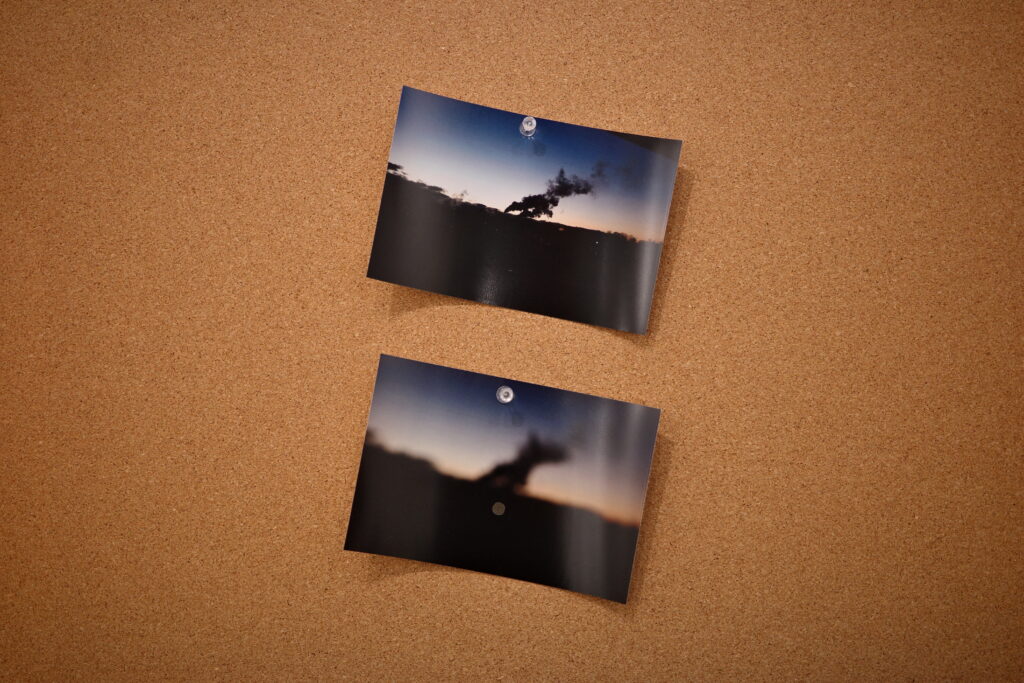
Incorrectly Perceived as Being Empty
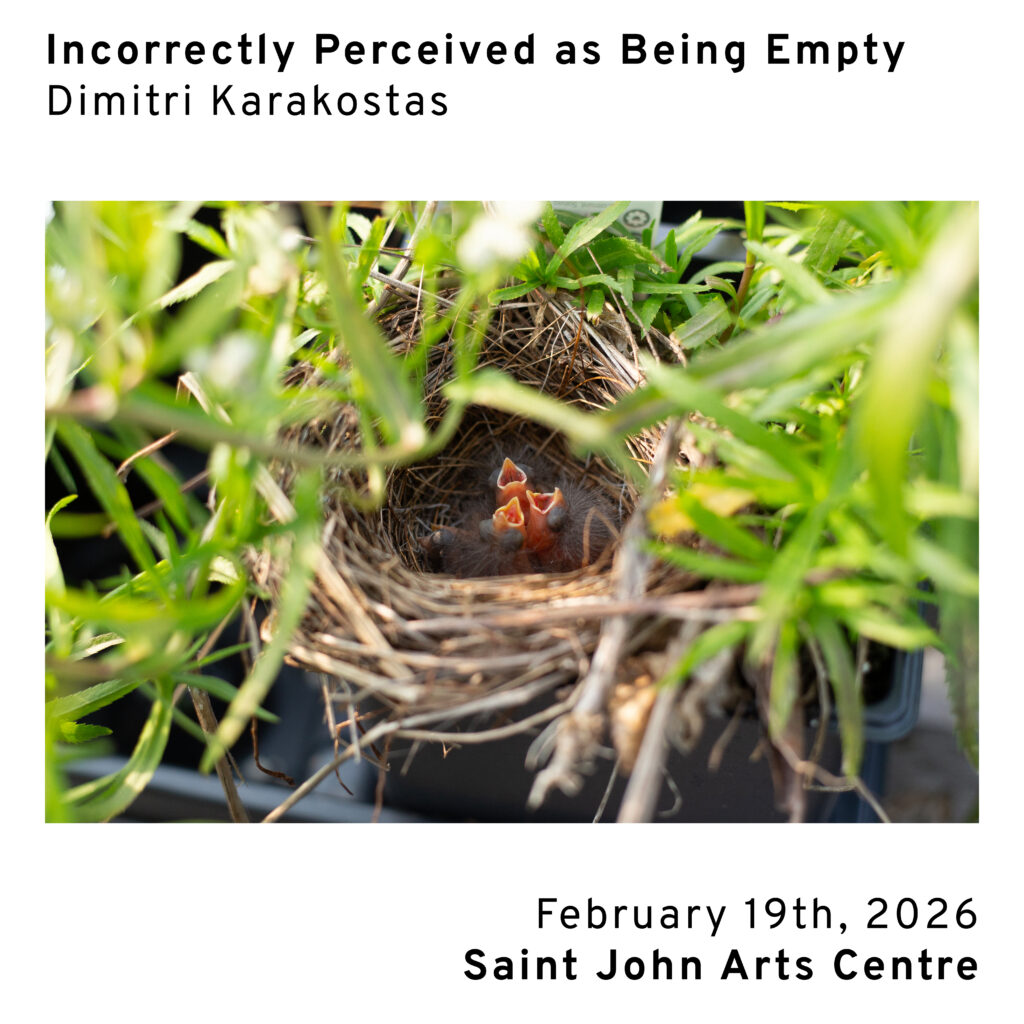
“I perhaps went a bit too far into Delillo territory when initially explaining this show – surveillance, systems, accumulation, unreliable narration, etc. I don’t want to copy-paste an artist statement so i’ll just give you the truth – it’s 100 photographs from the last two legs of the never-ending roadtrip. I know i’ll come back with a jazzy paragraph but for right now – that’s the simple rundown. It’s how i’d explain it to you in a bar.
The exhibition runs from February 19-March 27, 2026 at the Saint John Arts Centre in New Brunswick.
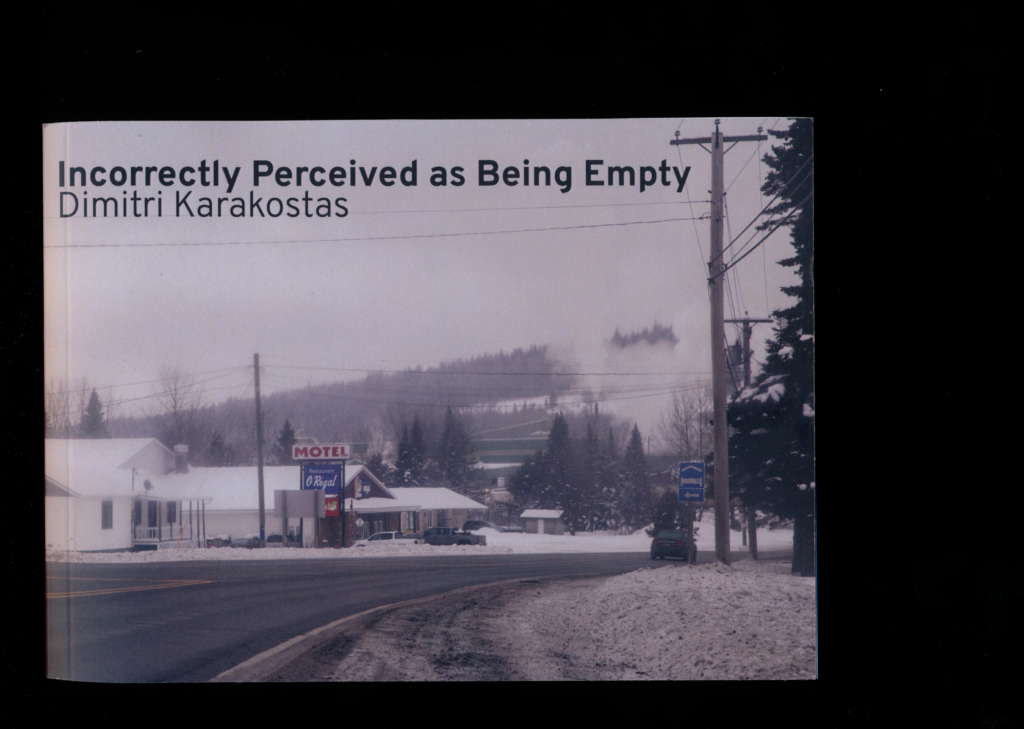
The catalog run in an edition of 100 alongside a free zine available only at the gallery (no mail outs for this one!) – fantastic introductory essay by Jacob Patrick Brooks, I owe him a tremendous debt of gratitude – ah, yeah, and also a t-shirt for those of us who didn’t want to blow heavy cash on the pricey-pricey book.”
(2026) Incorrectly Perceived as Being Empty, 86 pages (color, 9×7)
Sold Out
PDF
Sisyphus On A Roadtrip
Jacob Patrick Brooks
There is little I know for sure about Dimitri Karakostas. Hilarious, because over the last year or so, I don’t think there’s been a full week where we have not been in some kind of contact. Emails, texts, instagram DM’s, story replies. Spread out across disparate accounts with varying levels of authorship claimed by either of us. There are meme accounts, photography accounts. There’s one for his DIY publishing house. There are a few other suspected sockpuppets that have the specific paranoia I’ve come to associate with him. Everytime I get a package from him, it’s got a different return address. I couldn’t find him even if I wanted to.
Despite his elusiveness, I have come to think of Karakostas as a brother. This has grown out of a common ground that we both seek to express and understand rather than repress. A skepticism of authorship that’s led to a love of plagiarism. A signing off of emails with confessions of impending insanity. I think we both believe in God. I am deeply inspired and indebted to his work as an artist and a writer, which mines his life and world without succumbing to sentimentality, while also betraying a deep seated interest in beauty. This interest, however, is pursued through a strategy of radical retreat.
Characteristically, Karakostas seeks to hide his hand in his work. The recent projects have different names, but share systematic removal of the hand while still paying close attention to the world around him. He calls his technique of removed attention “procedural seeing”. Its inspiration comes from counterintelligence GOAT and legendary paranoiac, James Jesus Angleton.
Angleton maintained that there is no such thing as a detail too small. “Everything means something” Angleton would say, looming dracularly over his beleaguered, drunken subordinates while they intercepted and opened thousands of letters in the off chance that the Soviet Union was attempting to sneak coded messages under the noses of Authorities through the USPS to its highly placed and well hidden moles.
Ironically, as any Trueanon-listening, Brooklyn-living geek will tell you, this dedication to close looking did nothing to help Angleton find any spies. Double ironic because his good friend and highly placed British intelligence officer, Kim Philby would defect to Russia in early 1963 after accidentally having his cover blown as part of the Cambridge 5 spy ring.
The arc of Angleton’s life and Karakostas’ work is interesting to me. Angleton imagined a pattern would emerge from obsessive collection. Once he found the essential skeleton key that locked everything together, Angleton could win the great game of espionage and defeat the Soviet threat once and for all. Angleton’s mistake was this misplaced faith in accumulation, and by extension the archive. He assumed the archive had an innate ability to tell the truth if given enough room to stretch its legs.
Karakostas accepts the failure implicit in Angleton’s project and inverts the goal. Procedural Seeing relieves the artist-cum-intelligence of any eureka moments. Karakostas becomes nothing more than a collaborator with machines who just happened to be there to click the button. Karakostas the bureaucrat. A phototaking CEO. Don Delillo’s CIA historian in Libra. Karakostas’ biases are unavoidable, his doubt palpable. He is a compiler, he is complicit. He is in awe of the relentless, unexceptional continuance of things.
In his photos, we see inflatable tube men bent painfully in the wind. There are graffitied marble pillars, community centers. Hardly any people, but plenty of graves. The images are sad in a funny way, or funny in a sad way. I like the ones looking out of the car the best, where the capturing of an image within a temporarily stopped moving machine is acknowledged, doubling down on the “this will all pass” nature of the work. This is the logical end of his elusive persona: a system designed to erase the curatorial ‘I.’ The sockpuppet accounts and false return addresses are the life; ‘procedural seeing’ is the work. Both enact the same disappearance.
The sense of faith in the work is immense. That there will be, or won’t be, something there next time to look at. Karakostas is in awe of nature, of his surroundings. He loves life but in its abundance seeks to annihilate any specificity. Beauty is an accident. Life continues, whether or not you’re there. The work is about cycles, systems, indifference. The gaps therein. The artist of the month wall is empty. This property is under video surveillance, take a seat on the Liar’s Bench and feel the sunshine on your face on a snowy day.
Karakostas is aware that conditions will change, content to say this is what it was like here now. And now. And now and now, until all those nows accumulate into something that feels complete, at least for right then.
2026