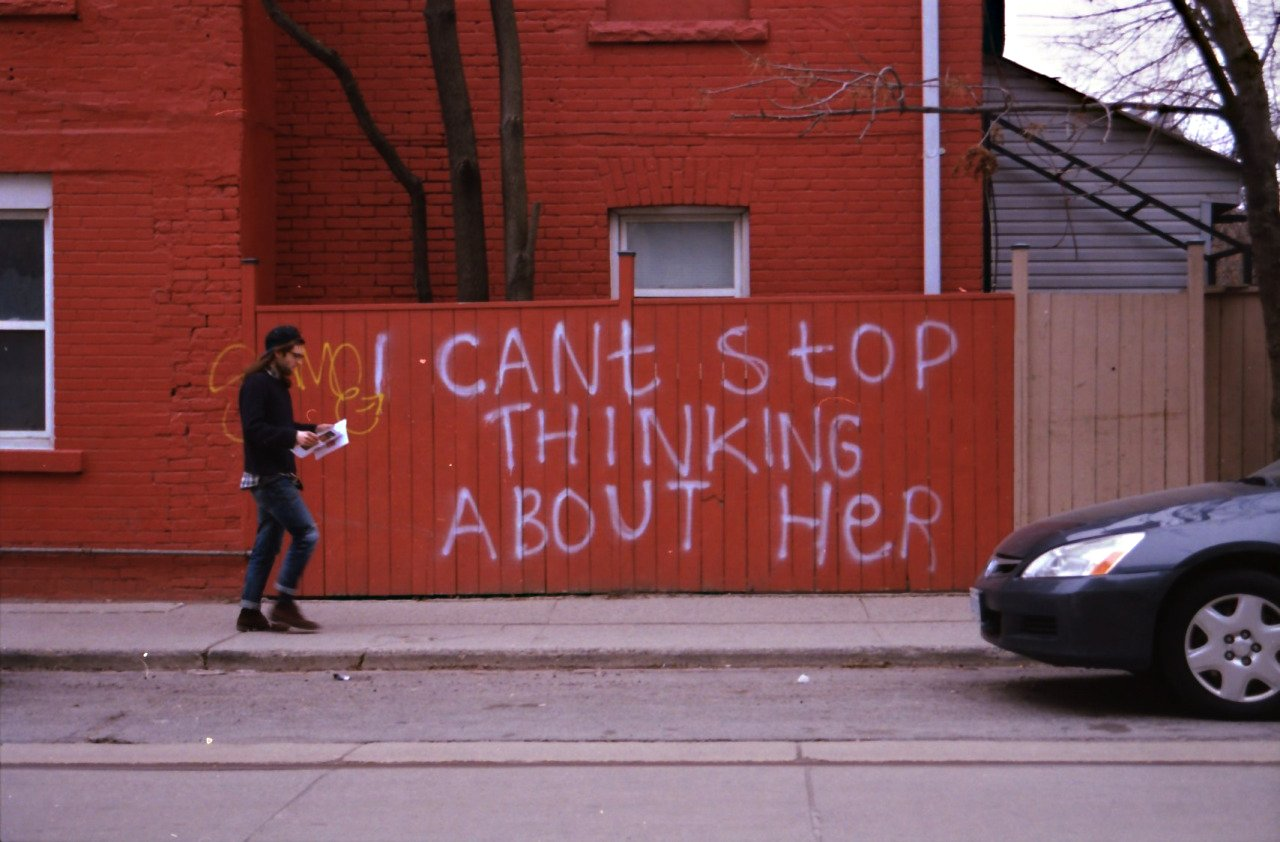
Dimitri Karakostas was born in 1988 in Toronto, Ontario. He has spent more than twenty years making photographs This is probably an understatement. Karakostas has been making photographs with some degree of seriousness since he was a teenager, first on film and later, reluctantly, with digital cameras. At some point he attempted to count the negatives and arrived at approximately 100,000, although this number should be understood as an estimate rather than the result of anything resembling responsible archival practice. It also only accounts for the film. Once digital photography entered the equation, any reasonable possibility of counting the photographs disappeared completely. This is perhaps for the best - most of them were never intended to become individual photographs anyway. They accumulated through assignments, walks, road trips, jobs, vacations, successful projects, failed projects, and the ordinary compulsion to photograph whatever happened to be in front of him. There was a time when people of importance described this as 'diaristic.' Some appeared in magazines or exhibitions; considerably more ended up in books; most have probably never been seen by anybody other than Karakostas himself. He continues to make photographs, which means the problem is getting worse. and putting those photographs into books. The books were, initially, a practical solution to the problem of having too many photographs. Karakostas has never been particularly interested in the photograph as a singular, precious object; photographs made more sense to him accumulated, sequenced, repeated, printed nicely, xeroxed cheaply, stapled together, bound, and occasionally given an ISBN. Over time this resulted in dozens of his own books and zines, usually produced in small editions and with varying degrees of professionalism. He has never been especially concerned with keeping them scarce. Quite the opposite: whenever possible, editions have been made cheaply, traded, mailed to strangers, donated, or simply given away. Copies are regularly left behind on road trips in the same towns where some of the photographs were made, which is either a democratic approach to distribution or an unnecessarily complicated form of littering. He does not own copies of everything he has made, and in several cases is no longer entirely certain what was published in the first place. This has made compiling a bibliography difficult. It has not prevented him from making more books. When he couldn't roam around making photographs, he wrote, which began mostly as a practical substitute for roaming around and eventually became its own problem. He still does both.
He has also been paid, which is an important distinction, to work in publishing, Having already established that making his own books was neither especially practical nor profitable, Karakostas began publishing other people’s. He founded Blood of the Young and Family Business Books, publishing more than 200 artist books over roughly a decade of printing, editing, sequencing, designing, packaging, distributing, and otherwise interfering with the work of other artists. “Publisher” makes the operation sound considerably more organized than it usually was. He also worked as a photo editor for VICE and Beautiful/Decay, which gave him a platform to talk about other people’s work with an enthusiasm and conviction he has traditionally lacked when discussing his own - and with significantly broader reach. Some of those artists went on to become considerably more successful than the person publishing or writing about them. Karakostas considers this evidence that the system worked. design, “Design” is perhaps an unnecessarily professional description of what he usually described as working in memetics, which was useful insofar as it made selling products based on jokes sound like something Marshall McLuhan might have approved of. The method was usually some combination of reappropriating, bootlegging, recontextualizing, and occasionally outright plagiarizing something that already existed. Originality was less interesting than recognition: take an image, logo, phrase, record cover, advertisement, or other piece of familiar cultural debris, move it slightly out of place, and see if the new context could make it mean something else. Or, ideally, make a good joke better. This produced apparel, album artwork, printed matter, graphics, products, and various other things that probably qualify as design in retrospect. Some of it eventually became legitimate work for other people, although the distinction between legitimate work and the other kind was never especially clear. Karakostas designed things for clients while continuing to make things whose commercial strategy amounted largely to putting them on the internet and seeing what happened. Occasionally a great many people saw what happened. This was enough to keep doing it. video, Karakostas made his first full-length skateboard video at sixteen to minimal applause, although the Jackass-inspired shorts that followed received considerably more of it. Much of the early work came from skateboarding, where photographing friends, filming them, editing footage, and designing graphics were all more or less part of the same activity. As cameras became progressively higher definition, he became increasingly interested in destroying the signal: lossy analog captures, datamoshing, compression, low-bitrate abstractions - anything to maintain the impression that the camera was only a means to an end. The later films became simpler, owing more to Jonas Mekas than MTV, and returned to the same autobiographical impulse as the photographs: he saw this; you should see it too. and a number of other jobs that make more sense individually than they do listed together. He doesn't do these things that frequently anymore.
If asked, he would usually just say he worked on the internet. “Worked on the internet” was less a job description than a convenient way of avoiding several of them. Depending on the year, Karakostas worked as a web developer, social media manager, government webmaster and cybersecurity consultant, crisis PR manager, and whatever else was required when somebody had a problem involving a website, an audience, or a reputation. At its busiest, his social media work reached more than a million people each month, a metric whose significance depends largely on what it is being compared to. Eventually, the internet became less a place he worked than infrastructure everybody was expected to understand. The description became meaningless without ever becoming inaccurate. This was both evasive and basically accurate.
A partial archive of all this work is here, although the existence of an archive admittedly complicates the claim that he doesn't do these things anymore.His current work is concerned with documentary photography and the unreliable construction of personal history Karakostas has increasingly organized his photographic work around memory, repetition, coincidence, archives, and the possibility that a sufficiently convincing personal history can be constructed from almost any collection of evidence. The more straightforward photographic work can be found at dimitrikarakostas.com; the considerably less straightforward version continues at memoryfog.com., which sounds suspiciously like the sort of sentence somebody writes after constructing a personal history for a website. He's also been working on a novel about this for a while now, for too long if you ask me. He'd probably just describe himself as a farmer in New Brunswick.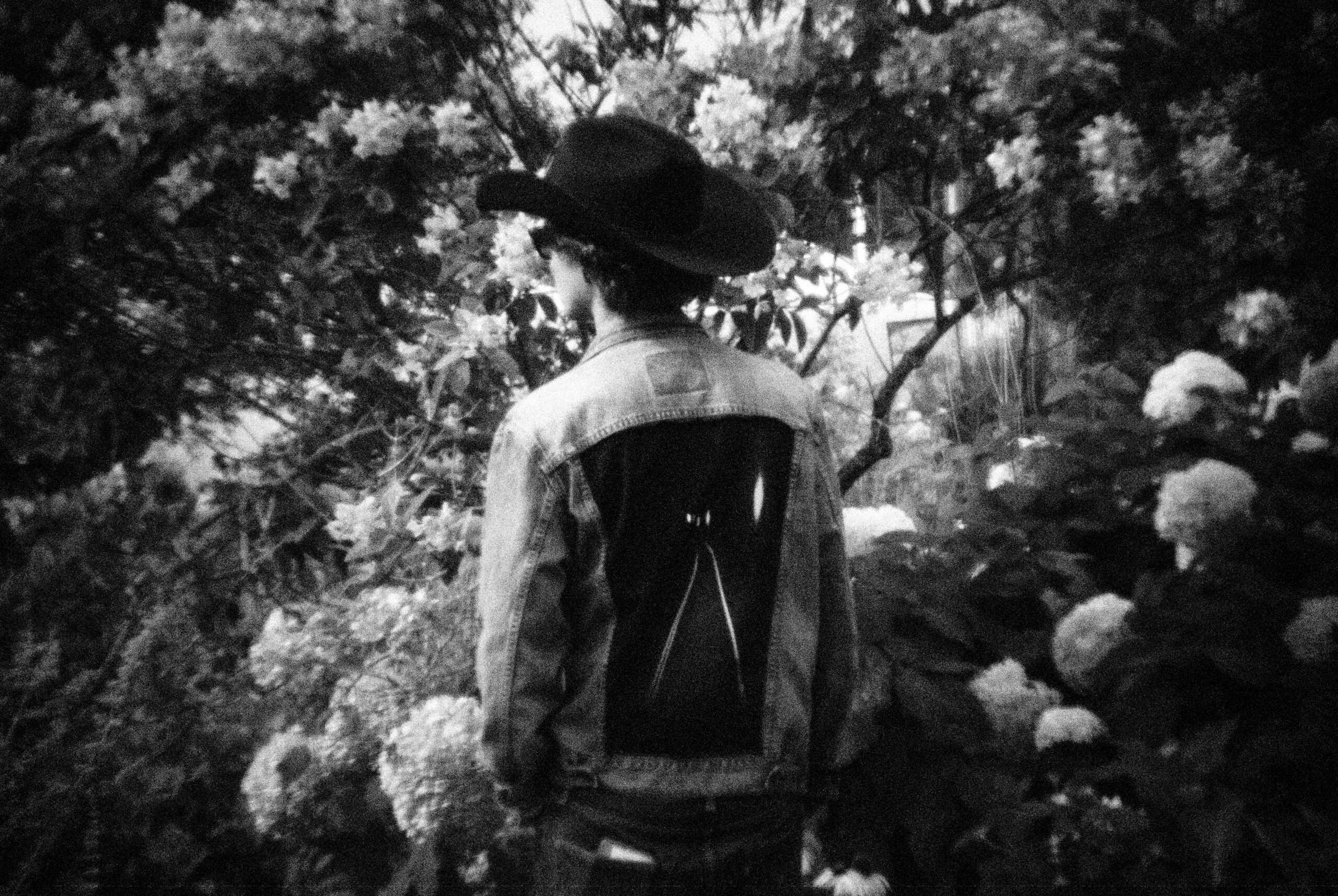
For whatever he is or isn't doing, he's available for work - maybe.
You can email him here if you'd like.